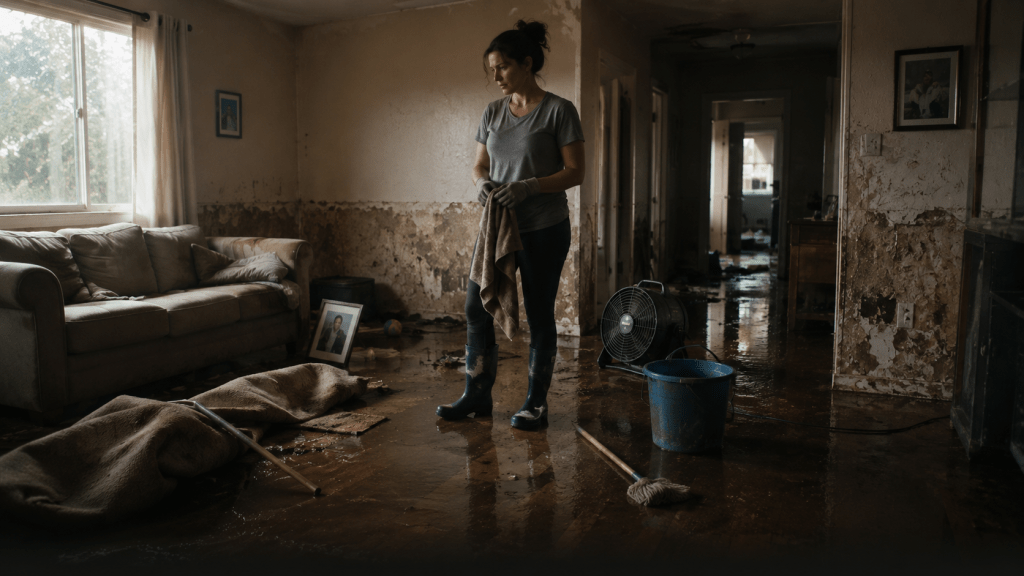
A burst pipe is stressful. A sewage backup is something entirely different. Many homeowners see standing water and assume all water damage is the same. It isn’t.
In the restoration industry, sewage-contaminated water is classified as Category 3 water, often called black water. This type of loss requires specialized equipment, protective gear, containment procedures, and professional biohazard cleanup protocols.
The reason is — Category 3 water isn’t just water. It’s a serious health hazard.
What Is Category 3 Water?
Category 3 water contains dangerous contaminants that can cause illness through direct contact, inhalation, or accidental ingestion.
Common sources include:
• Sewage backups
• Toilet overflows containing waste
• Floodwater entering from streets or storm drains
• River and groundwater flooding
• Water contaminated with bacteria, chemicals, or organic waste
Unlike a clean water loss from a broken supply line, contaminated water carries microorganisms that can remain active long after the visible water disappears.
Why Contaminated Water Is Dangerous
The biggest mistake homeowners make is assuming they can clean sewage water themselves. A mop, household disinfectant, and a few fans are not enough.
Contaminated water may contain:
• E. coli
• Salmonella
• Hepatitis viruses
• Norovirus
• Parasites and harmful bacteria
When sewage water soaks into drywall, insulation, flooring, carpet, cabinets, or structural framing, contamination spreads far beyond the visible area. Even after the floor appears dry, bacteria can remain trapped inside porous materials.
That’s why professional sewage cleanup focuses on removing contamination, not simply removing water.
Why DIY Cleanup Often Fails
Many homeowners attempt to clean sewage damage themselves to save money. Unfortunately, this often makes the problem worse. Without proper containment, bacteria can spread to unaffected rooms. Without commercial drying equipment, moisture remains trapped inside walls and flooring.
Without moisture mapping, contaminated materials may be left behind.
The result is often lingering odors, mold growth, indoor air quality issues, and recurring contamination problems weeks or months later.
How Professional Biohazard Cleanup Works
Professional restoration companies follow a structured process designed specifically for Category 3 losses.
The first step is safety.
Technicians wear full personal protective equipment and establish containment zones to prevent cross-contamination. Standing sewage water is extracted using commercial equipment. Contaminated drywall, insulation, carpet, padding, and other unsalvageable materials are removed.
Next comes cleaning, disinfection, and structural drying.
Moisture meters, thermal imaging cameras, and detailed moisture mapping help identify hidden contamination inside walls, subfloors, and structural cavities.
Only after moisture levels return to acceptable standards can reconstruction begin.
Time Matters More Than Most People Realize
The longer sewage water remains inside a structure, the greater the damage becomes.
Within hours, moisture spreads through wall cavities and flooring systems.
Within days, mold conditions develop. Structural materials begin absorbing contaminants, increasing the amount of demolition required later.
A fast response often means fewer materials need to be removed and lower overall restoration costs.
The Difference Between a Burst Pipe and a Sewage Backup
A burst pipe is usually considered a clean water event when discovered quickly. A sewage backup is automatically treated as a biohazard situation.
At Ursa Pro Restoration, we respond to both. Our team provides emergency extraction, moisture mapping, structural drying, contamination removal, insurance documentation, and reconstruction services throughout Los Angeles County.
Whether the loss involves a burst pipe, flooding, or Category 3 sewage contamination, the goal is the same: remove the hazard, dry the structure, and restore the property safely.
If you discover sewage water inside your property, avoid contact with the affected area, keep people and pets away, and contact a qualified restoration company immediately.
The sooner the cleanup begins, the safer the outcome.
 ursapro
Оставить комментарий