Conditions Necessary for Rot
Moisture. Rot fungi begin to actively develop when the wood moisture content exceeds 20 percent. Rot expert John Stall notes that moisture meter readings above 18 percent are a clear signal that the wood is beginning to rot.
Temperature. Rot fungi can develop at temperatures above 3°C. The optimal temperature for most fungi is about 80°F (27°C). The time of year when wood is most vulnerable typically falls during summer and spring, when temperature and humidity create favorable conditions.
Time. Water damage can manifest within 7 days to a month. This means that even short term moisture exposure can lead to significant damage if not addressed.
Hidden Risk Zones: Where Rot Most Often Begins
Some of the worst cases of framing rot from water occur in places homeowners never think about.
Around windows and doors. A failed seal can allow rainwater to enter the wall cavity year after year, destroying sheathing and framing studs. Peeling paint around windows is often the first sign that water has penetrated beneath the surface and begun destroying the wood.
Deck connections. Water seeps behind the flashing between the deck and the house and begins attacking the rim joist that supports the structure.
Attics and crawl spaces. Even without an active leak, poor ventilation can allow humidity to build up and keep wood damp enough for rot to develop. Poorly ventilated spaces such as attics and basements are ideal environments for fungal growth.
Areas where wood contacts the ground. Wood in contact with moist soil is especially vulnerable because the soil constantly supplies moisture.
Behind siding and exterior cladding. Water can penetrate behind siding through cracks or improperly installed elements, destroying sheathing and framing from the inside.
Signs of Rot That Cannot Be Ignored
Wood rot rarely announces itself dramatically. Instead, it leaves subtle clues.
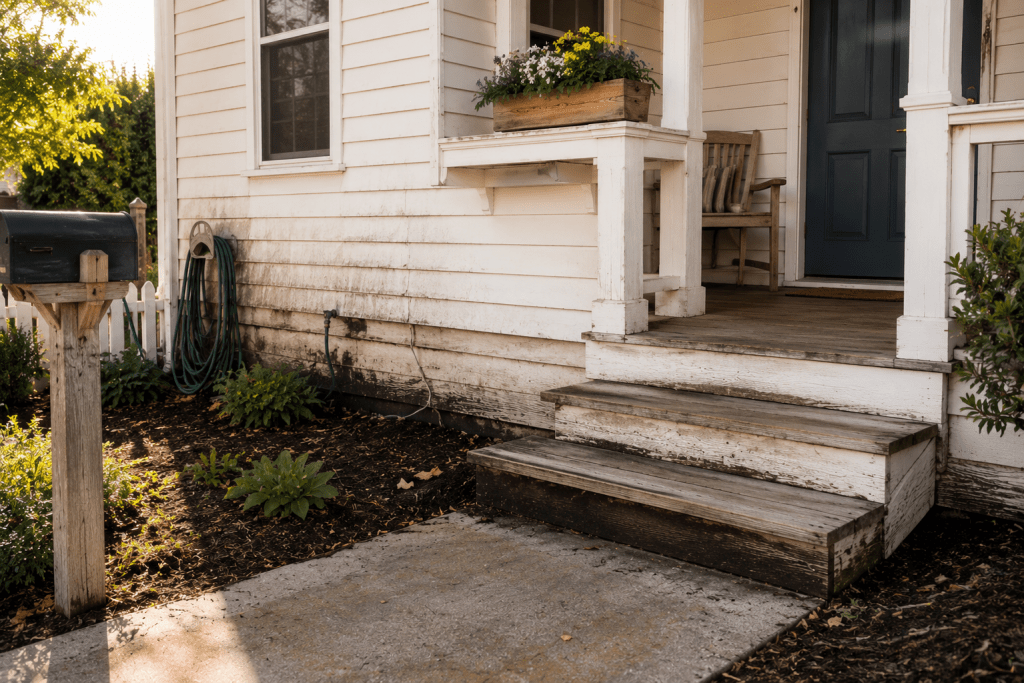
Peeling paint. Peeling paint is often the first sign that water has penetrated the wood. When water enters wood, paint peels, and as the board dries, moisture is drawn out through the wood, causing further peeling. This often happens when water enters through cracks in the paint or when wood constantly absorbs and releases moisture.
Soft or spongy wood. If a screwdriver or other sharp blade easily penetrates the wood, it is a sign that rot has already begun. Rot expert John Stall recommends checking suspicious areas by pressing on them with a screwdriver or knife, as damage may exist beneath an apparently normal surface.
Musty odor. A musty, earthy smell, especially in basements, attics, or near exterior walls, may indicate hidden rot. The smell is often compared to the smell of mushrooms or a damp basement.
Cuboidal cracking. Wood affected by dry rot darkens and cracks into cube shaped fragments, which is a characteristic sign of this type of rot.
The Scope of the Problem: Statistics and Costs
The problem of wood rot is far more common than many think.
An estimated 25 percent of homes suffer from dry or wet rot.
Nearly 10 percent of the wood produced annually in the United States is used to replace material damaged by rot.
A study conducted in the United Kingdom found that the cost of repairing properties affected by dry rot ranged from £250 to £59,000. In 79 percent of cases, the repair cost exceeded £1,000.
More than 25 percent of properties had more than one outbreak, and nearly 50 percent had outbreaks on multiple levels of the building.
The Screwdriver Test: How to Check Wood
One of the simplest ways to check wood for rot is to use a flathead screwdriver.
Press on the suspicious area. If the screwdriver easily penetrates the wood, if the wood is spongy or crumbles, rot is already present. Check around windows, doors, baseboards, decks, and in crawl spaces.
If the wood is hard and springs back, it is likely fine. If it is soft, you need a professional. The screwdriver test is a free way to detect hidden rot before it becomes dangerous.
Prevention: Keep Water Away From Wood
The best protection against wood rot is to keep moisture away from wood in the first place.
Check seals. Inspect seals around windows and doors annually. Replace cracked or peeling seals. A tube of caulk costs $5 to $10. Replacing a rotted window frame costs thousands.
Check downspouts. Ensure downspouts direct water at least 4 to 6 feet away from the foundation. Water discharged at the wall saturates the soil and the framing wood.
Check the roof. Inspect the roof twice a year. Replace damaged or missing shingles. A leaking roof wets rafters and sheathing that you cannot see.
Check ventilation. Ensure proper ventilation in attics and crawl spaces. Humidity trapped in these spaces can keep wood damp for years without visible leaks.
Check decks. Inspect deck connections annually. Check the flashing between the deck and the house. Water behind flashing is a leading cause of rim joist rot.
The Bottom Line
Water damage is not always about the visible leak. Often, the greatest risk is what happens after the leak is forgotten.
Hidden moisture can remain inside walls, floors, attics, and crawl spaces for months or even years. During that time, conditions for wood rot after a leak develop slowly, weakening the structure from the inside out.
By the time homeowners notice obvious signs of rotting framing from water damage, the repair is usually much larger than the original water problem.
This is why every leak deserves attention, even the small ones.
Water may stop dripping. But the damage can continue long after.
Professional restoration companies like Ursa Pro conduct moisture inspections, thermal imaging, and framing assessments to detect hidden wood rot across all 30 Los Angeles cities. Do not let hidden moisture destroy your home’s framing. Inspect. Detect. Repair. Protect your home.
 ursapro
Оставить комментарий