Most homeowners think of water damage as a repair issue. Buyers see it differently.
To a potential buyer, signs of past water damage can signal hidden mold, structural problems, future repair costs, and insurance headaches. Even when the leak has been repaired, a property’s history can still affect its marketability and selling price.
The reality is simple: water damage and property value often go hand in hand. A history of moisture issues can reduce a home’s value by 10 to 20 percent or even more if major structural problems are discovered. Research from the National Association of Realtors shows that homes with a history of flooding sell for an average of 8 percent less than comparable homes without such history, and in high end areas the difference can reach 15 to 20 percent.
Why Buyers Worry About Water Damage
Water is one of the most destructive forces inside a home. Unlike fire damage, which is usually visible, moisture can remain hidden for months or even years behind walls, beneath flooring, and inside attics or crawl spaces.
Buyers know that a small stain on a ceiling may indicate hidden mold growth (which can begin in as little as 24 to 48 hours), damaged insulation (losing up to 40 percent of its thermal effectiveness), wood rot (which begins when wood moisture content exceeds 20 percent), foundation movement (caused by soil erosion from prolonged leaks), ongoing plumbing issues, and expensive future repairs. As a result, many buyers become cautious the moment water damage appears on a disclosure statement or inspection report.
Facts and Sources: How Home Inspections Detect Hidden Moisture
The ANSI/IICRC S500 standard for water damage restoration establishes guidelines for measuring moisture in building materials. Normal readings are: drywall 6 to 9 percent, wood framing 8 to 12 percent, concrete (comparative) baseline. Levels above these norms indicate the need for professional drying or material replacement.
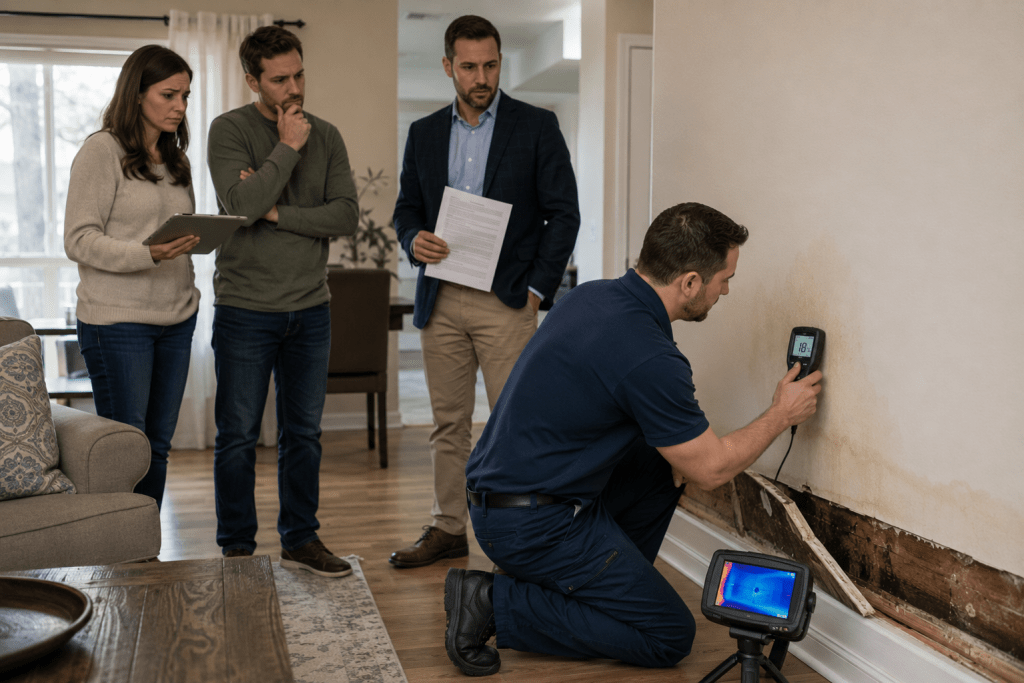
The American Society of Home Inspectors (ASHI) reports that water damage is one of the three most frequently discovered issues during home inspections. Inspectors use moisture meters and thermal imaging cameras to detect hidden moisture that the eye cannot see. Thermal imaging cameras can detect temperature differences indicating moisture evaporation behind drywall, even when the surface feels dry.
The Environmental Protection Agency (EPA) notes that indoor humidity levels above 60 percent can lead to mold growth and dust mites, creating health risks and reducing property value.
Real Life Example: Pasadena and a 14 Year Old Leak
Consider a home in Pasadena built in 1965. The owners lived there for thirty years. During that time, they had two leaks: one from the water heater in 2010 and one from the roof in 2018. Both were repaired. The stains were painted over.
When they put the home on the market in 2024, a buyer conducted an inspection. The inspector noticed something wrong. The basement smelled musty. Not strongly. But enough.
The inspector used a moisture meter on the wall next to where the water heater leak had been. The reading was 15 percent. Normal drywall should be below 10 percent. Moisture was still there. Fourteen years after the leak.
The explanation: the paper backing of the drywall had absorbed moisture that remained trapped behind the paint. The moisture never fully dried. It remained at a level where mold does not actively grow, but high enough to register on a moisture meter. This created a «ghost» odor that the inspector noticed.
The buyer demanded a $25,000 credit to cover potential mold remediation and structural drying. The seller agreed to $15,000. The home lost $15,000 in value due to a leak that happened fourteen years earlier. If the owners had used professional drying and documented it, they could have avoided this reduction.
The Role of Home Inspections: What Inspectors Look For
ASHI Standards of Practice require inspectors to report on visible signs of water stains, plumbing corrosion, mold growth, and elevated moisture. Many inspectors now use moisture meters as a standard tool.
The most common locations where inspectors find hidden moisture include areas around windows and doors (where seals fail over time), under sinks (where fittings leak slowly), around toilets (where wax rings fail), at the base of walls (where water pools on slab floors), on ceilings below bathrooms (where shower pans or toilets leak), in attics (where roofs leak or HVAC condenses), and in crawl spaces (where groundwater wicks through concrete).
Even if the damage occurred years ago, unresolved signs can trigger concerns and reduce buyer confidence. A study by the National Association of Home Inspectors found that 62 percent of buyers request additional evaluation or repair credits after water damage is discovered during an inspection.
In many cases, buyers request repair credits, price reductions, additional inspections, mold testing, and contractor evaluations. Some buyers may walk away from the deal entirely. Moisture inspection reports tend to scare buyers more than other findings because water is unpredictable. They do not know if it spread, if it dried, or if it will return.
Mold Can Dramatically Reduce Value
Nothing scares buyers more than mold. The CDC confirms that mold exposure can cause nasal stuffiness, wheezing, eye and skin irritation, and in people with weakened immune systems can lead to more serious infections.
Mold suggests that moisture has been present long enough for biological growth to develop (24 to 48 hours according to the EPA). Common concerns include health risks, poor indoor air quality, hidden moisture, and costly remediation. Even small mold issues can lead buyers to assume larger hidden problems exist behind walls or under flooring.
Professional remediation and documentation can help reassure future buyers and protect property value. A study published in the Journal of Environmental Health found that homes with documented professional mold remediation sold for 14 percent more than homes with unverified mold issues.
In one case in Woodland Hills, a homeowner paid $5,000 for professional mold remediation and obtained a post remediation air quality certificate. When a buyer came, the owner was able to show before and after reports, photos, and lab results. The home sold at full price. Without documentation, the buyer would have demanded a $30,000 credit.
Structural Damage Is Even More Serious
Water damage becomes far more expensive when structural materials are affected. The American Society of Civil Engineers (ASCE) warns that prolonged moisture exposure to wood can reduce its load bearing capacity by up to 50 percent in a relatively short period.
Long term moisture can weaken floor joists, roof rafters, wall studs, subfloors, and foundations. Wood rot and structural deterioration often remain hidden until an inspection reveals them. A study by the California Association of Realtors found that structural water damage is one of the top reasons deals fall through after inspection.
Once structural damage is identified, buyers typically expect significant price reductions because repairs can cost thousands or even tens of thousands of dollars. Joist replacement can cost $5,000 to $15,000, wall rot remediation $10,000 to $30,000, foundation repair $15,000 to $50,000.
In Encino, a homeowner discovered that the subfloor under the bathroom had rotted due to years of a slow toilet leak. The repair estimate was $18,000. The buyer reduced their offer by $25,000 to cover contingencies. The owner agreed. The water damage cost him $25,000 at sale plus the repair cost he never made.
Real Life Example: Sherman Oaks and a Hidden Leak
A condo owner in Sherman Oaks put his unit on the market. The unit was renovated. Fresh paint. New kitchen. New floors.
The buyer conducted an inspection. The inspector pressed a moisture meter against the wall behind the dishwasher. The reading was 28 percent.
The owner did not know about the leak. A pipe behind the wall was slowly seeping. The drywall was wet. The wood framing was darkening. Mold was growing. The leak was coming from a loose fitting installed during the kitchen renovation two years earlier.
The buyer walked away from the deal. The unit was taken off the market for four months for repairs. The leak was fixed. The drywall was replaced. The mold was removed. The wood framing was treated with antimicrobials.
When the unit was relisted, the new price was $35,000 below the previous listing price. Not because of the repair cost (that was $12,000). Because of the history. Potential buyers could find the old listing. They knew what had happened. The market stigma remained. The real estate agent explained, «once a property comes off the market for water damage, it never fully recovers its value.»
Location Reputation Also Matters
In high end areas such as Beverly Hills, Santa Monica, and Pacific Palisades, buyers can often afford to be picky. A home with a history of water damage may sit on the market longer or sell at a discount while comparable homes without such history receive full price.
In more affordable areas, buyers may be more flexible but will still use water damage as negotiating leverage. Either way, property value suffers.
How to Protect Property Value (If the Problem Has Not Happened Yet)
Prevention is better than cure when it comes to resale value.
Regular plumbing inspections. Inspect your water heater every 6 months. Replace washing machine hoses every 3 to 5 years. Check angle stops under sinks annually for corrosion. The average cost of replacing a washing machine hose is $15 to $30. The average cost of damage from a burst hose is $15,000.
Roof inspections. Have your roof inspected every 2 years and after major storms. Replace missing or damaged shingles immediately. The average lifespan of an asphalt shingle roof is 20 to 25 years. After that, leak risk increases significantly.
Monitor humidity. Keep indoor humidity between 30 and 50 percent. Use dehumidifiers in basements and crawl spaces. Install water leak sensors near water heaters, washing machines, dishwashers, and toilets. Sensors cost $20 to $100. Flood damage averages $10,000.
Know your home’s age. Homes built before the 1970s often have original cast iron sewer lines that are prone to corrosion. Homes built before the 1950s may have galvanized pipes that rust from the inside. Homes built in the 1980s and 1990s often have copper pipes that can develop pinhole leaks. Have a sewer line camera inspection if your home is over 40 years old.
Tips and Tricks: How to Fix the Problem If Water Damage Has Already Occurred
Dry immediately. Rapid water extraction and structural drying help prevent mold growth, wood rot, material deterioration, and long term structural damage. According to the EPA, you have 24 to 48 hours to dry materials before mold growth begins. Use a moisture meter to check walls, floors, and ceilings. Do not trust that a dry surface means dry material. Hire professionals with industrial air movers and dehumidifiers rather than trying to use household fans.
Hire IICRC certified professionals. IICRC certification means the technician has been trained in ANSI/IICRC S500 standards. Professional companies provide moisture mapping, drying reports, mold prevention, structural drying documentation, and final moisture verification. These records demonstrate that the problem was properly addressed.
Document everything. Save all restoration invoices, contractor reports, permits, before and after moisture readings, mold testing results, warranty information, and photos of the repair process. Create a «water damage history folder» to show future buyers.
Do not paint over or hide. Painting over a stain does not remove moisture. Paint prevents drywall from breathing. Moisture remains trapped. Wet drywall should be removed and replaced, not painted over.
Get a post remediation air quality certificate. If mold remediation was performed, ask your contractor for a post remediation air quality report confirming spore counts are within normal ranges. Provide this report to future buyers.
Be transparent. Disclose the history. Show the documentation. Explain how the source was fixed, what materials were replaced, what professional drying was performed, and what warranties are provided. When buyers see evidence that repairs were completed professionally, they are often far more comfortable moving forward. Transparency also protects you from legal liability for concealing defects.
Tips for Sellers: How to Sell a Home with a History of Water Damage
Get a pre listing inspection. Hire an independent inspector before putting your home on the market. Identify issues before the buyer does. Fix them professionally.
Create an information package. Include repair documentation, professional drying verification, moisture inspection reports, mold remediation reports, warranty information, and before and after photos. Provide this package to interested buyers before they conduct their own inspection.
Price realistically. If the damage was significant, your home’s value may be lower than comparable homes without a history. Price accordingly. An overpriced home will sit longer on the market, raising suspicion.
Use proper language in disclosures. Say: «In 2022, there was a water leak in the basement. The source (a burst pipe) was immediately repaired. A professional restoration company performed water extraction, structural drying, and mold treatment. All damaged materials were replaced. Documentation is available.»
The Bottom Line
Yes, water damage can lower property value. Research shows reductions of 8 to 20 percent depending on severity. Buyers and inspectors often view moisture issues as warning signs of hidden mold, structural deterioration, and future expenses.
However, the biggest impact usually comes not from the leak itself, but from how it was handled afterward. Professional restoration, proper drying, and complete documentation can significantly reduce buyer concerns and help preserve your home’s value when it is time to sell.
Professional restoration companies like Ursa Pro provide moisture detection, structural drying, mold remediation, and documentation for insurance claims and sale disclosures across the Westside, San Fernando and coastal Los Angeles communities.
 ursapro
Оставить комментарий