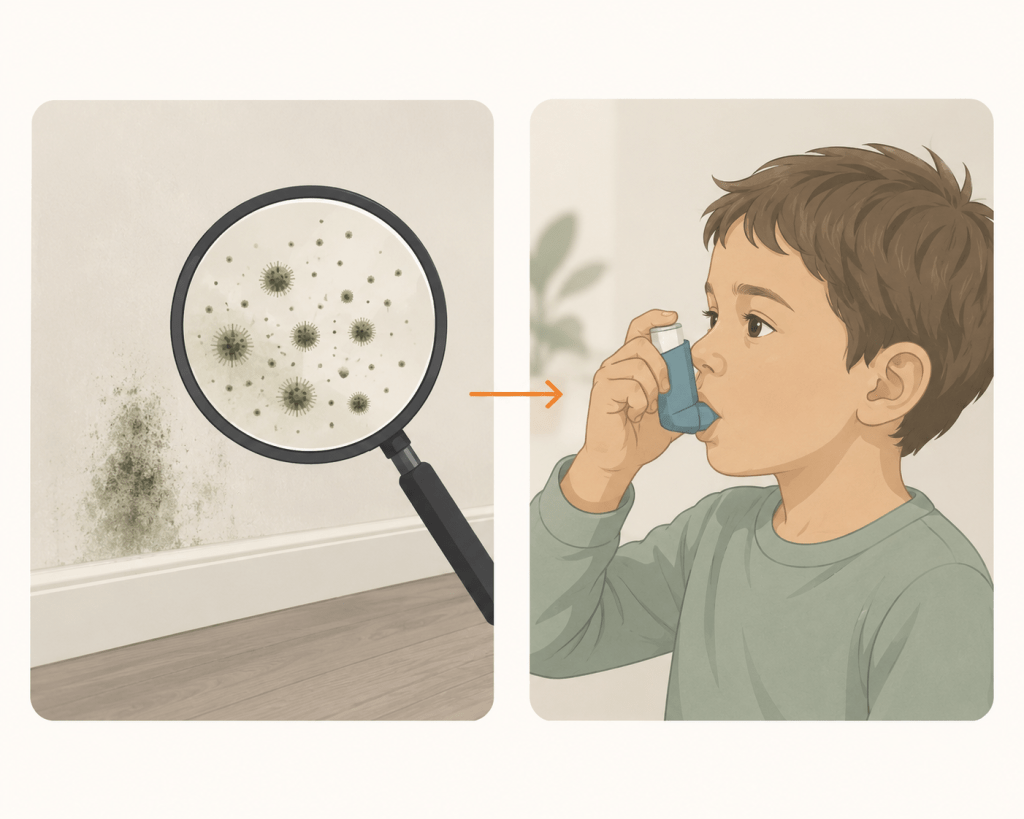
There are three mechanisms.
The first is inflammation. When you inhale mold spores, your immune system responds. Even without classic allergy symptoms, your body produces inflammatory cytokines. These molecules signal your brain that something is wrong. Chronic low-grade inflammation is a known driver of anxiety and depression. Your body feels threatened, so your mind follows.
The second is direct neurotoxicity. Some mycotoxins, particularly those produced by Stachybotrys chartarum (black mold), can cross into brain tissue. Animal studies show they can alter dopamine and serotonin pathways. The result can be irritability, heightened startle response, persistent worry, and a sense of unease that has no obvious trigger.
The third is physiological. Mold causes sinus congestion, post-nasal drip, coughing, and airway irritation. You may not even notice these symptoms during the day. But at night, they disrupt your breathing. Your brain detects the drop in oxygen. It triggers a stress response. You wake up gasping, heart pounding, flooded with adrenaline. You think it is a panic attack. It is not. It is your body fighting to breathe.
Real Cases from Los Angeles
Case Study: West Hollywood — The Lawyer Who Could Not Think
A woman in her early forties lived alone in a West Hollywood apartment. She was sharp, successful, a litigator. Then she started losing things. Phone. Keys. Documents. She would open her laptop and stare at the screen, unable to remember what she was supposed to do.
Her doctor ran blood tests. Everything normal. A neurologist did cognitive testing. Mild impairment, cause unknown.
She started sleeping poorly. Waking at 3 AM. Heart racing. Convinced she was dying. She saw a psychiatrist who diagnosed generalized anxiety disorder and prescribed a benzodiazepine.
The only clue was a musty smell in her bedroom closet. She had noticed it for years. Assumed it was just the building.
A friend in construction brought a moisture meter. The wall behind the closet read 28 percent. When the drywall was opened, black mold covered the entire cavity. An old roof leak had been feeding it for years.
The mold was remediated. Within three months, her cognitive tests returned to baseline. She stopped the anxiety medication. She sleeps through the night.
Case Study: Santa Monica — The Family Who Could Not Wake Up
A family of four in Santa Monica complained of constant fatigue. The parents described it as «walking through mud.» Their two children, ages seven and nine, were falling asleep in class. Teachers suggested sleep disorders. Pediatricians recommended melatonin.
The family had no visible mold. No water stains. No smell.
An indoor air quality consultant tested the HVAC system. The evaporator coils were covered in a slimy biofilm containing multiple species of mold. The system had been blowing spores throughout the house for years.
The HVAC was cleaned and treated with UV lights. Within two weeks, the children stopped falling asleep at school. The parents said they felt like «someone turned the lights back on.»
Case Study: Pasadena — The Man Who Thought He Had Dementia
A retired engineer in his late sixties lived in a Pasadena craftsman home he had owned for thirty years. He started having trouble with basic tasks. Balancing his checkbook. Following recipes. Remembering appointments.
His wife took him to a neurologist. MRI was normal. Cognitive screening showed deficits in short-term memory and executive function. The diagnosis was mild cognitive impairment, possible early Alzheimer’s.
He became depressed. Anxious. Stopped leaving the house.
During a bathroom renovation, contractors discovered extensive mold behind the shower wall. The original plumbing had been seeping for years. The wooden studs were black.
After remediation, his symptoms did not improve immediately. But over six months, his cognition gradually returned. Two years later, he was gardening, driving, and managing the household finances again. His neurologist had no explanation. His wife did.
What to Do If You Suspect Mold Is Affecting Your Mind
Do not assume your symptoms are psychiatric before you have ruled out your environment.
Test your home. A professional mold inspection with moisture mapping and air sampling can identify hidden contamination. Thermal imaging cameras can see cold spots where moisture hides inside walls.
Check your sleep. Do your symptoms worsen at night? Do you wake up congested? Do you feel worse in your bedroom than anywhere else?
Leave for a week. If you can, spend five to seven days away from your home. In a hotel. At a friend’s house. Anywhere else. Do your anxiety, brain fog, or sleep improve? If yes, your home is the variable.
Remediate properly. Do not spray bleach. Do not paint over stains. Find the moisture source. Remove contaminated materials. Dry the structure. This is not a DIY project. Hidden mold behind walls requires professional remediation.
Work with a doctor who understands environmental illness. Not all physicians recognize mold-related neurotoxicity. You may need to find a functional medicine doctor or an environmental health specialist.
Do not let anyone tell you that your symptoms are «all in your head.» The cause may not be in your head. It may be in your walls.
Professional restoration companies like Ursa Pro provide mold inspection, moisture detection, and remediation services across Los Angeles. If you cannot think clearly, if you cannot sleep, if you feel anxious for no reason, do not medicate the symptom. Inspect the source. Your brain will thank you.
 ursapro
Оставить комментарий