Older homes in Los Angeles have character. They also have hidden plumbing risks most homeowners never think about until water starts dripping through the ceiling or bubbling under the floor.
A house built in the 1920s, 40s, or 60s may still look beautiful from the outside. But behind the walls, many aging systems are already failing. Galvanized pipes. Cast iron sewer lines. Brittle supply connections. Weakened foundations. Decades of hidden moisture damage.
In many cases, the age of the house itself becomes the biggest water damage risk. The real problem with older homes is not just the leak itself. It is how long the leak stays hidden inside aging systems. Because once water gets inside the structure, age stops being charm and starts becoming liability.
A real story from Pasadena
Take the case of a homeowner in Pasadena last year. The house was built in the 1960s and still had its original galvanized pipes. Everything looked fine from the outside. No stains on the walls. No bubbling paint. No reason to worry.
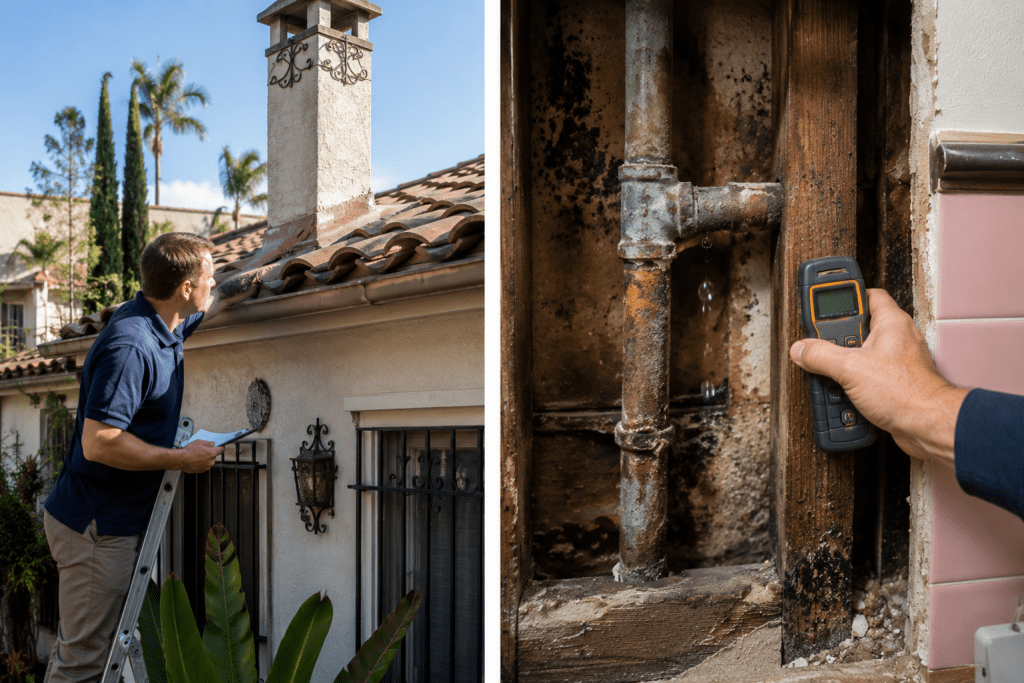
But behind the bathroom wall, a slow leak had been running for over a year. A pinhole in an old galvanized pipe. Just a tiny drip, day after day. The drywall soaked up moisture like a sponge. The wooden studs turned dark and soft. Mold started spreading inside the cavity.
By the time a plumber discovered the leak, the damage was severe. The homeowner needed not just a simple pipe repair but also extensive drywall replacement and full mold remediation. What could have been a routine re pipe turned into a major restoration project. The total cost exceeded twenty two thousand dollars. A simple inspection and early leak detection would have caught the problem at a fraction of that cost.
This story plays out across Los Angeles every year. In Pasadena, South Pasadena, San Marino, Arcadia, and Burbank, thousands of homes still have original plumbing from the 1950s and 60s. Those pipes are living on borrowed time.
Why older LA homes are more vulnerable
Many Los Angeles neighborhoods still rely on infrastructure installed fifty to one hundred years ago. Places like Beverly Hills, Santa Monica, Brentwood, Pasadena, and Arcadia contain thousands of older properties with original plumbing and aging construction materials.
Water damage in older homes rarely happens all at once. Usually, the house gives warnings first. Slow leaks. Musty smells. Warped flooring. Unexplained stains that homeowners ignore for years.
In West Hollywood, Culver City, Sherman Oaks, Encino, Woodland Hills, and Studio City, those warnings often go unnoticed until a ceiling collapses or a floor buckles.
Deteriorating plumbing systems
One of the most common causes of water damage in older LA houses is aging plumbing.
Homes built before the 1970s often contain galvanized steel plumbing. Over time, galvanized pipes rust internally. The inside diameter slowly narrows until pressure increases, corrosion spreads, and pinhole leaks develop inside walls.
Many homeowners never realize a pipe is failing until drywall swells, flooring buckles, or ceilings collapse. In older homes, even a small plumbing leak can spread unnoticed for months.
In Pacific Palisades, Malibu, Calabasas, Agoura Hills, and Thousand Oaks, where many homes were built decades ago, these hidden pipe failures are becoming more common every year.
Cast iron sewer line problems
Older Los Angeles homes frequently still use cast iron or clay sewer laterals. This is especially common in historic neighborhoods like Pasadena, South Pasadena, San Marino, and Arcadia.
These sewer systems crack over time and become vulnerable to root intrusion, corrosion, shifting soil, and backups. Once roots enter the pipe, sewage backups and black water damage can follow quickly.
Unlike clean water leaks, sewer contamination creates major health hazards and far more expensive restoration requirements. In Torrance, Rolling Hills Estates, Palos Verdes Estates, and Rancho Palos Verdes, tree roots are a constant battle for older sewer lines.
Foundation and crawl space moisture
Older foundations absorb moisture much differently than newer construction. Over decades, concrete weakens and mortar deteriorates. This allows subterranean moisture to seep into crawl spaces, basements, slab edges, and lower wall cavities.
Many older homes in Los Angeles develop chronic hidden moisture underneath the structure long before visible damage appears upstairs. Common warning signs include musty odors, warped hardwood floors, soft subflooring, and mold growth near baseboards.
In Manhattan Beach, Hermosa Beach, Redondo Beach, Marina del Rey, Playa Vista, Playa del Rey, and El Segundo, coastal moisture makes foundation problems even worse. The combination of salty air and aging concrete accelerates deterioration quickly.
Roof leaks during LA storms
Older roofs struggle during Southern California’s heavier winter storms. Flat roofs, aging flashing, and outdated drainage systems become major weak points.
During heavy rain, water may pool on roofs, travel behind stucco, enter attic spaces, and run inside walls long before homeowners notice the leak. By the time a ceiling stain appears, insulation and framing may already be saturated.
This risk is present across all thirty cities, from Beverly Hills and Santa Monica to Woodland Hills and Thousand Oaks. Every older roof is a potential water intrusion point waiting for the next big storm.
Dangerous materials in older homes
Water damage becomes even more complicated when older hazardous materials are involved.
Homes built before 1978 may contain asbestos in popcorn ceilings, asbestos in drywall compound, old vinyl floor tile adhesives, and lead plumbing or paint. Once water damage begins, disturbing these materials during DIY cleanup can become dangerous.
Cutting wet drywall or removing damaged flooring without proper containment may release hazardous particles into the air. That is why professional remediation becomes especially important in older homes.
Mold growth happens fast
Southern California’s humidity fluctuations create ideal conditions for mold after water exposure. Mold can begin developing within twenty four to forty eight hours inside walls, subfloors, crawl spaces, insulation, and attic cavities.
Older homes with poor ventilation often experience faster mold spread because moisture remains trapped longer behind original materials. In places like Sherman Oaks, Encino, Woodland Hills, and Calabasas, where temperature swings are dramatic, mold problems appear even faster.
What to do if water damage happens
Stop the water source immediately. If the problem comes from plumbing, shut off the main water valve. The faster water stops flowing, the smaller the structural damage becomes.
Document everything. Take detailed photos and videos of stains, damaged flooring, wet drywall, plumbing failures, and personal belongings. This documentation becomes critical for insurance claims.
Avoid DIY demolition. If the house may contain asbestos, lead, sewage contamination, or widespread mold, do not begin tearing materials out yourself. Licensed professionals certified through the Contractors State License Board should handle restoration safely.
The real problem with older homes
A modern house may survive a small pipe leak with minor drywall repairs. An older Los Angeles home may already have weakened framing, rusted plumbing, compromised insulation, or previous hidden moisture damage waiting beneath the surface.
That is why old plumbing risks should never be ignored in historic LA homes. The age of your home is the biggest risk factor you cannot see.
The team at Ursa pro specializes in older Los Angeles homes. They know galvanized pipes. They know cast iron sewers. They know where moisture hides in buildings built fifty or one hundred years ago. Call them before your house gives you a warning you cannot ignore.
 ursapro
Оставить комментарий