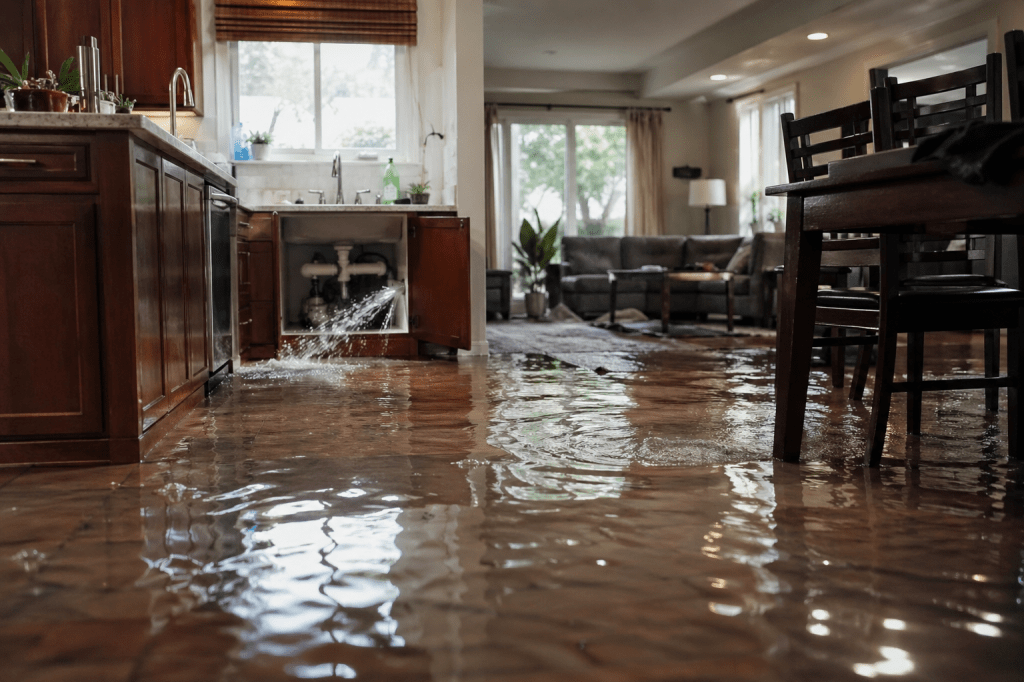
It always starts the same way. A leak under the sink. A small flood from the washing machine. Towels everywhere, a couple of fans running overnight. By morning, the room looks dry — and the homeowner thinks the problem is solved.
Then, a month later, the smell starts.
Hidden moisture is the silent enemy you never see coming. And that’s exactly why DIY water damage cleanup is far riskier than most people realize.
The story of “we dried it ourselves”
“We handled it ourselves. Just a little water.”
That’s what the homeowners near Burbank thought in early 2024 after a dishwasher hose cracked beneath their kitchen cabinets. They dried the visible water, opened windows, and ran household fans for two days. Everything looked fine.
Four weeks later, mold began growing behind their brand-new kitchen cabinets. When the installers removed the cabinet frames, the drywall was black. The insulation was soaked. Moisture readings inside the wall cavity were still above 25%.
A classic case of DIY water damage mistakes leading to hidden mold and bacteria growth.
Why You Shouldn’t Tackle Drying Out Your Home Yourself
Let’s skip the magic spells. Here’s what actually awaits those who think a couple of fans and an old vacuum will handle a flood.
Two days after you wiped the floor
Mold doesn’t need 48 hours to get started. Neither do you. Within a day or two after the water is gone, spores can already be doing their thing. And they feel right at home where you never even looked: behind plywood, under laminate, inside a wall.
And if the water wasn’t clean — say, from a washing machine or a sewer backup? Then bacteria join the party. You can’t see them, can’t smell them, but you’ll breathe them in every evening in your kitchen.
Fans don’t dry — they just make you feel better
A household fan moves air around the surface. It doesn’t pull moisture from the subfloor. It doesn’t reach the insulation behind the drywall. A week later, the floor feels dry. But inside? A tiny swamp: humidity pushing 30%, warm darkness, a paradise for fungus.
The result: a musty smell you can’t get rid of. People sell furniture, rip out cabinets, scratch their heads — where is it coming from? From inside.
Floors warp. Ceilings? They just give up.
Waterlogged wood doesn’t forgive. First, just a squeak. Then laminate starts buckling. Then a floor joist slowly begins to lose its strength. In older homes, this has ended with a ceiling collapse a month after the homeowners said, «Yep, it’s dry.»
Scary? That’s an understatement. But there’s no other way to say it.
One mistake — and you’re live
Water and electricity are old enemies. If an outlet sits below the flood level and you walk in barefoot, the consequences can come very quickly. This isn’t a horror story. These cases exist in real life.
And even if there’s no shock, but the water was dirty — you’re working without gloves, without a respirator, without rubber boots. And in a couple of liters of that gray sludge, there could be a whole bouquet of pathogens.
Your insurance will say «no» — and they’ll be right
The worst part comes a couple of months later, when mold shows up. You call your insurance company. And they say: «Please provide a professional drying report with moisture readings and thermal imaging.»
But you have nothing. Just a photo of a fan on the floor.
And that’s when you realize: the money you saved by not calling a professional has turned into the full cost of repairs — paid entirely out of your pocket.
When to Call a Professional
- The water comes from a sewer source (black water)
- The affected area is large
- Water has been left untreated for more than 48 hours
- Water has entered walls, ceilings, or flooring
- You notice a musty smell or visible mold
- Floors or ceilings feel soft, swollen, or spongy
If you ignore these signs and something goes wrong, don’t try to outsmart the damage with another fan. That’s when you call the professionals.
Professional teams show up with industrial dehumidifiers, air movers, moisture meters, and thermal cameras — equipment designed to find water you cannot see. They don’t just dry surfaces. They dry the structure itself.
 ursapro
Оставить комментарий